Graffiti in Cotonou: Inside the Mafaya Workshop, GBEDO and Ismail Train the Next Generation
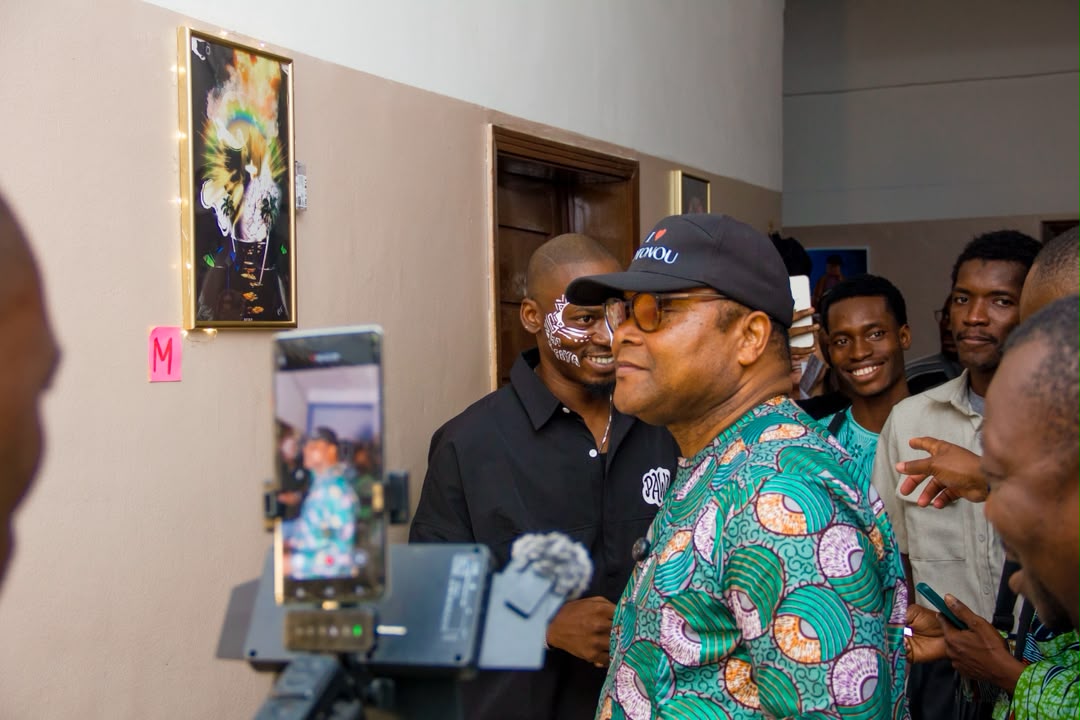
Graffiti in Cotonou: inside the Mafaya workshop, GBEDO and Ismail train the next generation in the 3rd arrondissement
A blank wall in a courtyard in Cotonou's 3rd arrondissement. Kids crouched in front of it, spray can in hand, still hesitant about that first stroke. Since July 13, 2026, this is where a good part of the future of graffiti in Cotonou is being decided.
The Mafaya exhibition, led by artists Aka Gbedo and Ismail Alao Osseni, doesn't just display work — it teaches. Until July 31, dozens of children from the neighborhood are learning the basics of graffiti through a free workshop open to all residents of the 3rd arrondissement.
The local press covered the launch, the official speeches, the presence of the district chief. What the articles didn't tell you is who GBEDO is, why the project is called Mafaya, or how he sees the graffiti scene in Cotonou that he's helping to grow.
To understand Mafaya, you first have to understand the man behind it.
GBEDO, a path born on a whim
Aguiar Gbedonoukoun Maurice Morel didn't go to art school to become a graffiti artist.
"I became GBEDO on a whim," he says. It started with a friend telling him about a group of young Beninese urban artists traveling to out-of-the-way places to bring walls back to life with murals. He joined the group. What followed was pure self-teaching: he threw himself into it, pushed his own curiosity until he mastered the technique.
This kind of path, without a diploma or an institutional studio, is common in the Cotonou graffiti scene. It was built through collective practice, jam sessions between artists, the wall as the only teacher.
Walls as a travel log
Today, GBEDO keeps up the same approach. He keeps stacking up freestyles and collaborations. A mural in Akpakpa. Another in Grand Popo, with Finnish artist Sebastien. A third in Fidjrossè, with Manon.
That detail matters. Beninese graffiti has been crossing national borders for years, carried by encounters between local and international artists. GBEDO fits into that logic of collaboration rather than that of the lone artist.
His tags, he says, don't go unnoticed around Cotonou. It's this years of hands-on practice on the street that now feeds the Mafaya workshop. Learning in the street gave him a pragmatic view of creation: materials are expensive, opportunities are rare, but the drive to paint outweighs those obstacles.
Mafaya, never give up
The word comes from Yoruba. Mafaya means never give up.
"It's a universal message, a way to give yourself strength, to never stop working, to learn patiently, to master the craft," GBEDO explains. A philosophy of discipline as much as of art. It shows even in the choice of medium: a neighborhood wall rather than a gallery. Kids who've never held a spray can, rather than an audience of connoisseurs.
Perseverance. Patient learning. Gradual mastery. Those three words sum up the workshop as much as the name of the exhibition.
Two artists, two methods
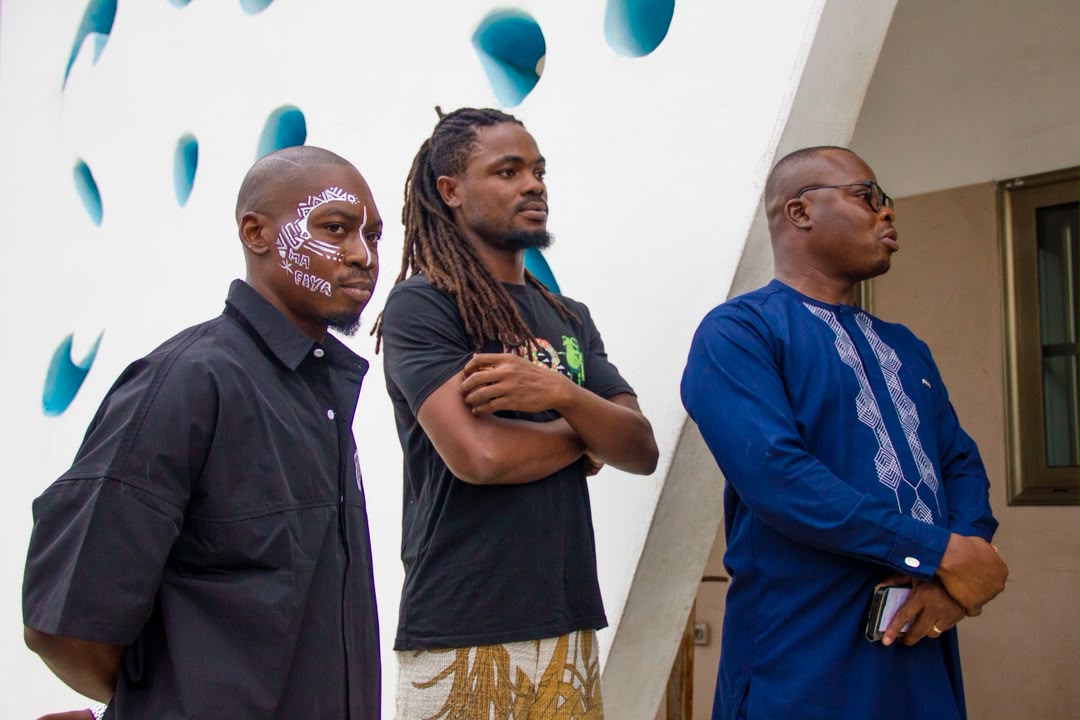
On the project, the division of roles follows a clear logic. Ismail Alao Osseni handles the visuals and design. GBEDO takes care of communication and staging. The rest, they share.
This division of labor partly explains the exhibition's coherence. A designer who thinks in images, a street artist who thinks in space and the story around it. Two different logics that complement each other rather than overlap.
Ismail Alao Osseni trained as a designer. GBEDO, meanwhile, comes from the wall, from the street, from a gesture repeated until it becomes mastery. This meeting between two ways of making an image — one through the screen, the other through the spray can — gives Mafaya a visual identity that resembles neither a simple social project nor a gallery show. The aesthetic is raw, but deliberate.
The children taking part in the workshop watch both methods play out in front of them. They learn the technique of the gesture with GBEDO. With Ismail, they discover that graffiti is also something you think through before you paint. One sketches lettering on a tablet; the other teaches the perfect distance between the spray can and the concrete to avoid drips.
One month to pass it on
The workshop runs for nineteen days, from July 13 to 31. Short, on the scale of an artistic apprenticeship. Enough, according to GBEDO, to lay the groundwork.
This choice of a short format isn't a compromise — it fits the Mafaya philosophy: not aiming for full mastery in a month, but instilling discipline, familiarity with the tool, and confidence that can keep building after the exhibition ends. The children don't leave as professional graffiti artists, but they leave having been introduced to a form of expression that had seemed out of reach until now.
A scene that's growing
Cotonou didn't need Mafaya to have a strong graffiti identity. The city already has the Heritage Wall, more than 940 meters of murals by around forty artists from the Effet Graff festival, one of the longest graffiti-covered walls in Africa.
Mafaya follows in that wake, at a different scale. Not a tourist landmark, but a neighborhood workshop.
GBEDO watches this dynamic from the inside. "The graffiti scene in Cotonou is growing today — I see new artists, and I also see how the public is getting interested. It creates hunger. People start buying in and feeling like it's theirs too," he says.
The names that matter
He names several artists who matter to him in this world: Seencelor, Dr Mario, Lionel Davinci, Afi. Names that, for some of them, are also linked to the Heritage Wall and the country's major urban art festivals.
That list says something important. Benin's graffiti scene isn't a set of isolated artists each working in their own corner. It's a dense network. The same names keep coming up from one project to the next, from one wall to the next, from a festival to a neighborhood workshop.
GBEDO is part of that network without being at its center. He points to other artists before talking about himself — a reflex that says a lot about the collective culture of Benin's urban art scene, where competition often gives way to the need to build a real pipeline.
Two scales, the same energy
The Heritage Wall showed that Benin could carry off a graffiti project on an international scale, with the involvement of artists from elsewhere like Eduardo Kobra. Mafaya shows something else: that the same creative energy can be passed on at a micro scale, in a single neighborhood, to a handful of children discovering a spray can for the first time.
The two approaches don't compete. They answer each other. One gives an impressive international showcase to graffiti in Cotonou. The other patiently builds the generation that will one day paint that kind of wall with the same confidence.
GBEDO's ambition
Asked about the future, GBEDO doesn't talk only about Mafaya.
He sees himself, five years from now, organizing major exhibitions internationally, taking part in large-scale projects. His goal, he says plainly, is to become the most distinguished artist in Africa and the world.
A bold ambition. It contrasts with the modesty of the current setup: a worn wall, a group of children, a rainy month of July.
What the workshop is really preparing
This might be the real point of Mafaya. Not just passing on a technique to the children of the 3rd arrondissement. Building, wall after wall, the trajectory of an artist aiming high, and training along the way those who might one day take over. Teaching is also a way of anchoring his own name in the visual history of his city.
The workshop ends on July 31. The name, though, remains a program: never give up.
The 3rd arrondissement, a deliberate choice of ground
Choosing the 3rd arrondissement for Mafaya was no accident. It's one of Cotonou's densest districts, with a hyperactive neighborhood life and a large youth population looking for direction, or simply for meaningful activities during the summer months.
The workshop was officially launched on July 10, 2026, at the district's own headquarters, in the presence of the district chief and several local cultural figures and residents. This institutional launch — rare for a graffiti project usually seen as underground — shows just how seriously local authorities have taken the initiative.
Support that goes beyond a footnote
Local authorities have publicly praised an initiative that brings children closer to contemporary art and showcases the neighborhood's raw talent. This institutional backing fundamentally changes the project's reach. In many urban contexts, a graffiti workshop remains a marginalized practice, sometimes wrongly associated with damage to public space.
In Cotonou, in the 3rd arrondissement, thanks to Mafaya and GBEDO's charisma, graffiti becomes a recognized tool for artistic education, personal discipline, and social cohesion. Local officials see the direct impact on young people channeling their energy into color rather than idleness.
What it changes for the neighborhood
For an entire month, an ordinary wall in the 3rd arrondissement becomes a learning lab rather than just a dead visual surface. The children who pass through leave with a tangible technical skill, but also with an unforgettable experience of discipline, listening, and patience — values GBEDO places at the very center of the word Mafaya.
It's this hyper-local dimension, rooted in the dynamics of one specific neighborhood in Cotonou, that sets Mafaya apart from the city's major mural projects aimed at tourism or international audiences. The workshop isn't trying to attract outside visitors. It's trying to change, quietly and lastingly, how the neighborhood's children relate to the urban art around them.
Frequently Asked Questions (FAQ) on Graffiti in Cotonou
What is the Mafaya project?
Mafaya is a free graffiti exhibition and workshop created by GBEDO and Ismail Alao Osseni, aimed at children in Cotonou's 3rd arrondissement. Its purpose is to pass on the basics of street art. The word comes from Yoruba and means "never give up."
Where can you see street art and graffiti in Cotonou?
The urban art scene here is very active. The best-known site is the "Heritage Wall" along the port, with nearly a kilometer of murals (created during the Effet Graff festival). You'll also find plenty of work in Akpakpa, Fidjrossè, and in the 3rd arrondissement through the Mafaya project.
Who are the well-known graffiti artists and urban artists in Benin?
Besides GBEDO, who is very active both on the ground and in teaching, the Cotonou graffiti scene includes several prominent Beninese urban artists regularly mentioned: Seencelor, Dr Mario, Lionel Davinci, and Afi. This network of artists is part of Benin's current cultural momentum.
How do you learn graffiti in Benin?
The vast majority of artists are self-taught, learning on the street during collective events called "jams." That said, free initiatives like the Mafaya workshop led by GBEDO now give younger people a way to be introduced to spray-can techniques.